In short: if you learned match types years ago, what you know is out of date: exact, phrase and broad now match by meaning, not by text, and close variants cannot be switched off. The truth about your account is no longer in your keyword list but in the search terms report, and the only literal control you keep is negatives.
If you learned match types years ago, what you know is out of date. The square brackets and the quotation marks are still there, but what they mean has changed from top to bottom: Google no longer matches words, it matches intent. This lesson brings your mental model up to date — and shows you where the control Google took away has gone, and how to get it back.
What do exact, phrase and broad mean today?
| Match type | How it is written | What it triggers TODAY |
|---|---|---|
| Exact | [running shoes] | Searches with the same meaning or intent: «shoes for running», «running trainers»... |
| Phrase | "running shoes" | Searches that include the meaning of your keyword, with things before and after |
| Broad | running shoes | Searches related to the topic, based on everything Google knows about the user and the context |
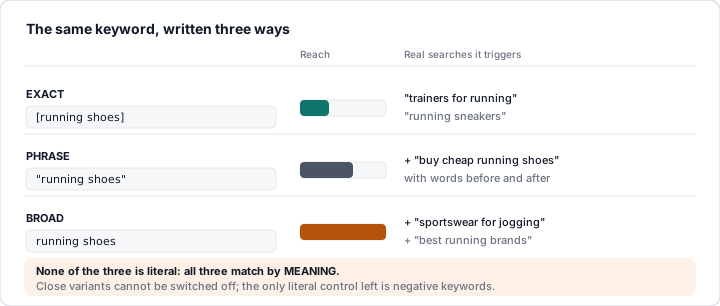
Notice the word that keeps coming up: meaning. Exact match is no longer "exact" in the literal sense: [employment solicitor] can be triggered by «solicitor specialising in unfair dismissal». Google calls this close variants, and it cannot be switched off. Google has also confirmed that exact and phrase match keywords can now serve ads in AI Mode when it detects direct search intent.
Why does Google match intent rather than words?
Modern matching runs on the same language models Google uses in its search engine. The practical consequences:
- Coverage grows on its own. An account with 50 exact keywords receives traffic today that years ago would have needed 500.
- The search term is in charge. What matters is no longer your keyword list, but the report of real search terms: that is where the truth about what you are paying for lives.
- Broad stopped being "throwing money away"... with conditions. With Smart Bidding, broad uses auction signals the other match types cannot see. Without Smart Bidding and without supervision, it is still the door your budget walks out of.
Where is money lost with match types?
A vocational training account was bidding on "forklift course" in phrase match. Real terms that triggered the ad in one month:
- «forklift course price» ✅ (a buyer)
- «free forklift course» ❌ (not your customer)
- «how much does a forklift driver earn» ❌ (curiosity, not buying intent)
- «renew forklift licence» ⚠️ (depends on your business)
None of those terms was in the account as a keyword. 40% of the spend was going to intents that would never buy. Modern match types give you reach; the professional's job is to filter the intent with the other half of the system: negatives.
Why are negatives more important now?
Negative keywords still work literally (no intent-based expansion — although for some time now Google does ignore capitals, accents and obvious plurals). That makes them your precision tool:
- Review the search terms report every week (in high-spend accounts, every few days).
- Classify every expensive term: buying intent, curiosity, something else?
- Negativise by the root of the problem, not term by term: «free», «jobs», «salary», «second hand»... a good list of roots kills thousands of bad future searches.
💡 Ninja trick: this weekly work is exactly the kind of repetitive, clear-rule task a script does better than a person. In the Suite two pieces cover it: Negative Keywords (White List) — you define which traffic you DO want and everything else is negativised automatically — and the Search Query Optimizer, which applies your scenarios (cost with no conversions, low CTR, semantic irrelevance...) to the real terms every night. The gap Google left when it took control away from you is filled by automation.
How do you build an ad group today?
The old structure (one ad group per match type variant, dozens of single-keyword ad groups) no longer adds anything: if three match types of the same keyword compete, Google resolves the duplicate on Ad Rank. What works today:
- Few keywords per ad group (5-15), grouped by real intent, not by syntax.
- Exact + phrase for the core of the business; broad only with Smart Bidding, and always with the negative seatbelt fastened.
- The effort that used to go into micromanaging match types goes today into search terms and negatives. Same time, better invested.
What you should remember
- Exact, phrase and broad match by meaning, not by literal text, and close variants cannot be switched off.
- The truth about your account lives in the search terms report, not in your keyword list.
- Negatives are literal: they are your scalpel. A list of roots plus regular review.
- Broad yes, but with Smart Bidding and supervision. Bare broad on manual bidding is still a budget leak.