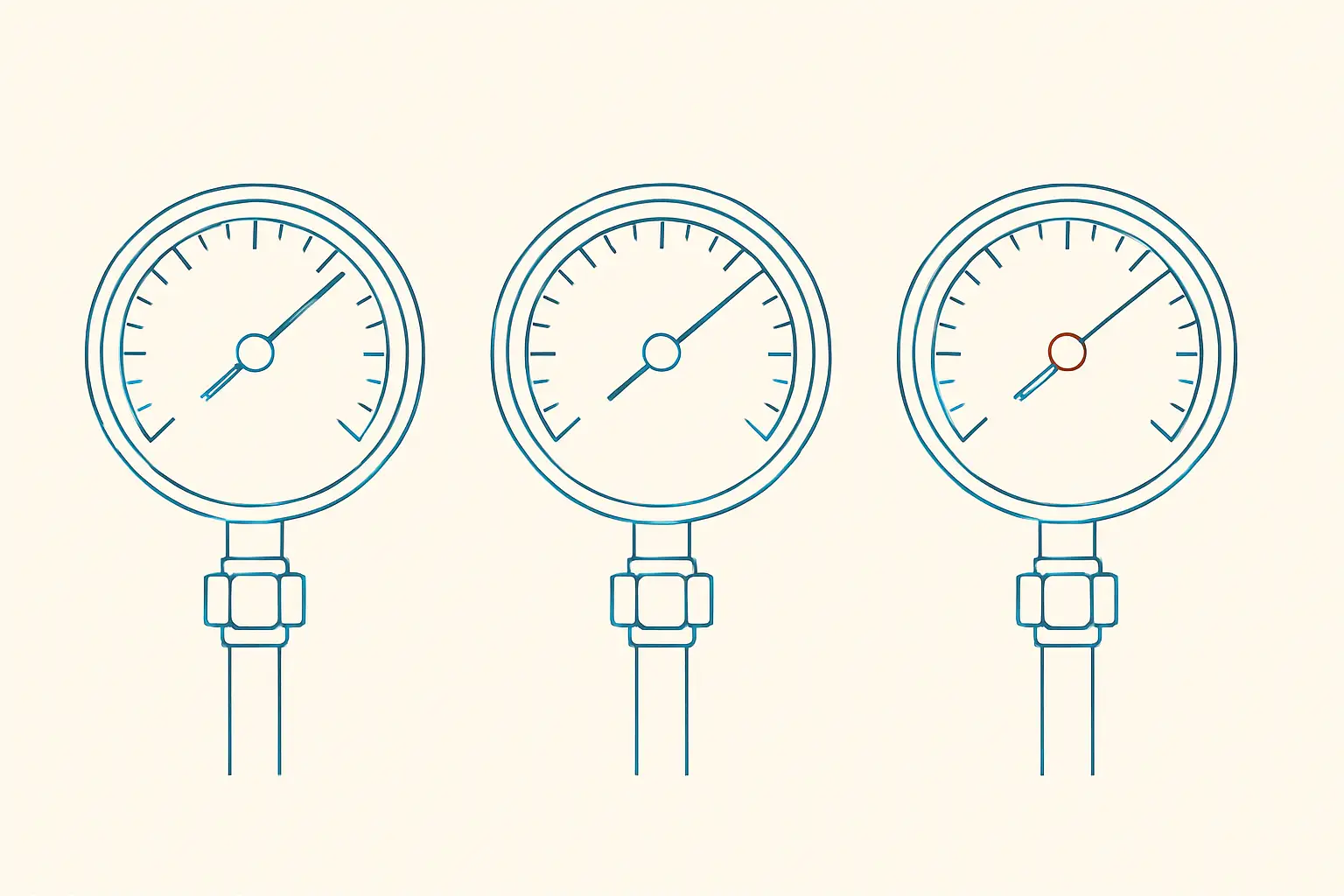
In short: there isn't one Quality Score, there are three, and the one in your column is the least important: a warning light that isn't even used in the auction. The ones that decide are the ranking QS (where you appear) and the CPC QS (what you pay), recalculated on every search. A detail almost nobody knows: the landing page doesn't decide position, but it does make the click more expensive.
Google hid the Quality Score column by default, stopped talking about it in its guides and the market concluded that "it no longer matters". It is a comfortable and false conclusion, and the root of the confusion is that there are three Quality Scores, not one. The one you can see is the least important. The other two decide, today and in every single search, where you appear and how much you pay. This module develops the ebook «The drawer» from the Library: if you have read it, here is the study version; if you have not, start here.
1 · What is the visible Quality Score and what is it for?
The 1-to-10 number in the keyword column. What you need to know about it:
- It is only calculated for the exact match between the search term and your keyword. All the traffic coming in through variants, phrases or broad has its own hidden QS figures that this number does not reflect.
- It is not used in the auction. You can have a visible 6/10 and perform beautifully on the terms that actually bring you traffic — or the other way round.
- It updates lazily: once a day at most; with few impressions, weeks. The real versions are recalculated on every single search.
- Even so, it is gold: it is the only window Google leaves open onto the system. A visible QS that falls warns you that something has broken; one that rises confirms that the work is paying off. It is a warning signal, not a KPI.
2 · Which Quality Score decides where your ad appears?
Every time somebody searches, Google calculates a Quality Score on the fly for that specific search: the exact term, the device, the location, the time of day. That value — internal, with far more resolution than a 1-10 — decides two things: whether your keyword even enters the auction (the ad rank thresholds from the Basic level) and how strongly it competes once it is in. It is the quality half of Ad Rank.
3 · Which Quality Score decides what you pay?
On top of the ranking QS, Google adds the landing page experience and other factors to calculate the version that determines what you pay for the click. A detail almost nobody knows: the landing page is not used to decide your position, but it can make your click more expensive. You can be at the top and overpaying without knowing it: your position does not warn you; the invoice does.
The three Quality Scores, in one table
| Version | Where | When it is calculated | What it decides |
|---|---|---|---|
| Visible (1-10) | The keyword column | Once a day at most; exact match only | Nothing in the auction; it warns you |
| Ranking | Internal | On every search, by term/device/area | Whether you get in and in what position |
| CPC | Internal | On every search, landing page included | How much you pay |
Why did Google stop talking about Quality Score?
With automation (Smart Bidding, intent-based match types, PMax), Google has shifted the conversation towards "give the algorithm data". That is true and it is compatible: Smart Bidding bids inside an auction whose order and price are still governed by quality. An account with a low ranking QS pays more for every click Smart Bidding decides to buy, and gets into fewer auctions than it could. The algorithm optimises; quality decides how much that optimising costs it.
💡 Ninja trick: when somebody tells you "Quality Score no longer matters", ask them which of the three they mean. The visible one is debatable as a metric; the other two decide your position and your price in every search. Our QS Analyzer works on the visible one because it is the only window there is — but it turns it into something useful: a weighted QS by the cost of each keyword and an effective QS that estimates how much of your real traffic is covered by keywords with a decent score. The number in the column, read properly.
What you should remember
- There are three Quality Scores: the visible one (warning light), the ranking one (doorman) and the CPC one (the one that charges you).
- The visible one is not used in the auction and only measures exact match; the other two are calculated on every search.
- The landing page does not decide position but does make the click more expensive.
- Smart Bidding bids inside an auction governed by quality: a low QS means paying more for the same thing.