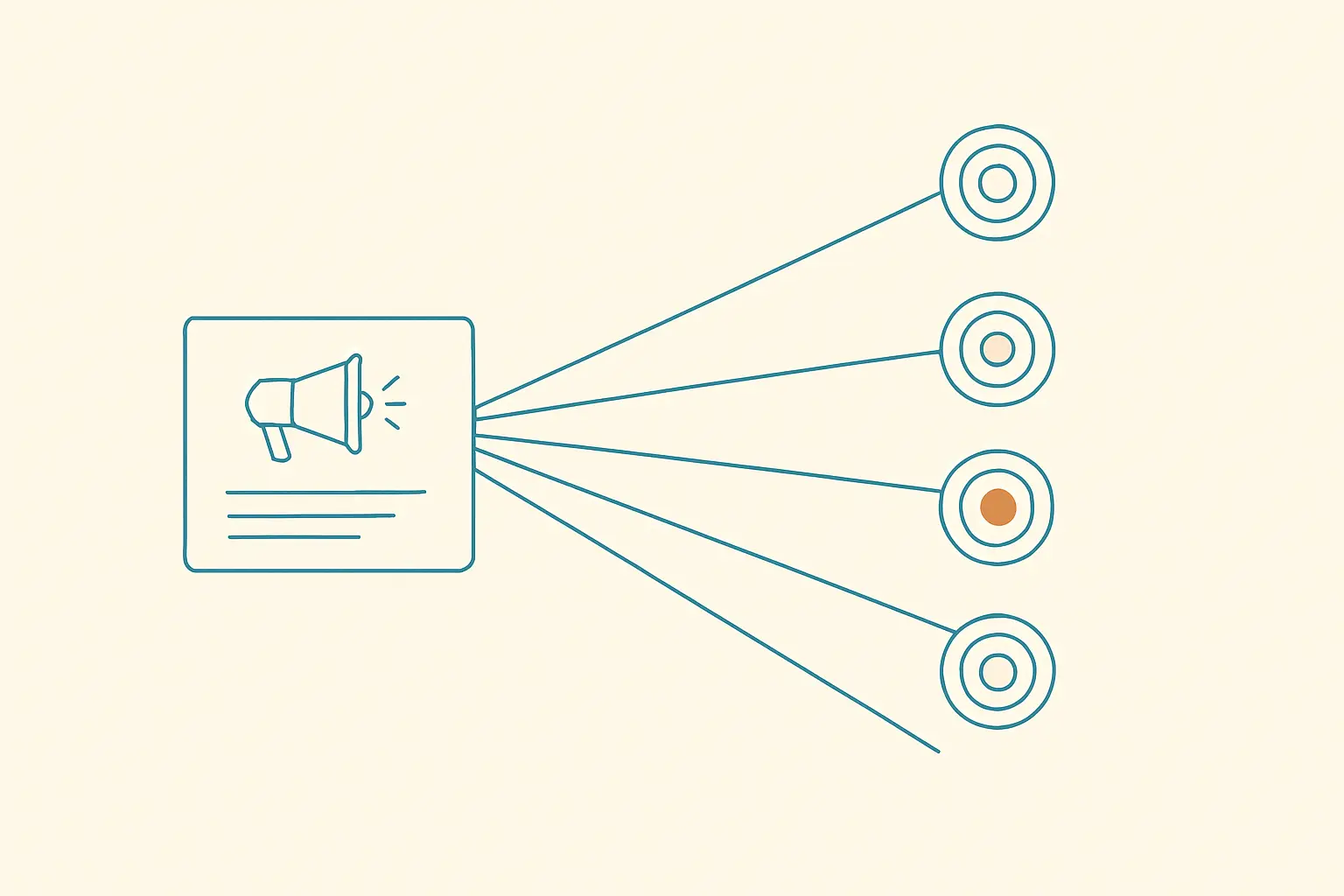
In short: the ad is the only element in the account that touches all five metrics at once: copy → CTR → Quality Score → CPC → impressions → conversion. High relevance makes up for a low bid, so a good ad makes future clicks cheaper. Bidding well with mediocre ads is driving with the handbrake on.
This module develops the ebook «The eternal ad» from the Library: the optimisation almost nobody does because "the ads already work". Start with what is at stake. An ad is not a piece of copy: it is the hinge of the whole account, the only element that touches all five metrics that matter at the same time.
1 · How does ad copy affect CTR?
CTR is not a vanity metric: it is how users vote on whether your ad answers what they were looking for. Two ads for the same keyword, in the same position, can have CTRs that differ by two or three times — purely because of the copy. The headline that mentions exactly what the user typed, the concrete figure instead of the vague promise, the angle that connects (price, urgency, trust, novelty)… all of that translates, click by click, into a different percentage.
2 · How does a good ad lower the price of a click?
This is where the chain turns into money. As we saw in Module 3, expected CTR is the heaviest component inside Quality Score, and QS decides your position and what you pay per click in every auction. The mechanics have been in force since day one: high relevance offsets a low bid. An ad that raises CTR in a sustained way is, literally, making every future click in that ad group cheaper; a mediocre one is making them more expensive, even if it "works".
3 · Why does a good ad make the budget go further?
If each click costs less, the same budget buys more clicks and enters more auctions. And there is a second effect almost nobody counts: with a better QS, Google shows you more — your impression share improves without raising the bid. The better ad does not just pay less: it appears more. That is the difference between buying visibility with money and earning it with relevance.
4 · Can an ad win clicks and lose sales?
The most forgotten part of the chain: the ad does not just attract clicks, it decides which clicks it attracts. The promise in the headline pre-selects the visitor: an ad promising «from €9» brings bargain hunters; one promising «certified installation in 48 h» brings buyers with urgency and budget. Same cost per click, completely different conversion rate.
That is why ad testing is not only about CTR: it is about finding the message that connects with the audience that converts, not the one that merely clicks. An ad can win on clicks and lose on sales — and only a properly measured test tells one from the other.
What is the key idea of ad optimisation?
| Metric | How the ad moves it |
|---|---|
| CTR | Directly: the copy is the user's vote |
| Quality Score | Via expected CTR, the heaviest component |
| CPC | Via QS: high relevance offsets a low bid |
| Impressions | Via QS: more auctions, more share without raising the bid |
| Conversion | Via the promise: the ad chooses who comes in |
The ad is the only element in the account that touches all five metrics at once. Optimising bids with mediocre ads is tuning a car engine with the handbrake on. Smart Bidding bids better than anyone, but it bids for the click your ad is capable of winning, at the price your ad has earned.
💡 Ninja trick: the chain ad → CTR → QS → CPC can be measured end to end when the RSA Optimizer and the QS Analyzer work as a pair: the second publishes relevance by ad group, the first reads it and concentrates testing where the chain is broken, and the effect shows up in the group's QS over the following weeks. From the chapter to the spreadsheet.
What you should remember
- Copy → CTR → QS → CPC → impressions → conversion: five metrics, a single element.
- High relevance offsets a low bid: a good ad makes future clicks cheaper and appears more.
- The ad filters who comes in: winning clicks and losing sales is possible; only a measured test tells the difference.
- Bidding well with mediocre ads is the handbrake on.